
This article is available in English only.
Italian cuisine is loved worldwide for its rich flavours, fresh ingredients and comforting dishes. Yet truly authentic Italian recipes can be hard to find. Many versions online have been adapted or simplified until the essence is gone. Authenticity is about more than a list of ingredients — it reflects regional tradition, family heritage and a real respect for quality.
What makes an Italian recipe authentic?
Fresh, seasonal ingredients
Italian cooking leans hard on fresh vegetables, herbs and good olive oil. Seasonal produce is not a trend here, it is the baseline.
Simple preparation
Traditional dishes often have very few ingredients but demand careful technique. The goal is to bring out natural flavour, not to bury it under heavy sauces.
Regional specificity
Recipes vary enormously across Italy. The north leans on butter and cream; the south on olive oil and tomatoes. Both are correct — in their own place.
Respect for tradition
Many recipes have been handed down through generations. Authentic cooking honours those steps instead of cutting them.
Three classics worth learning
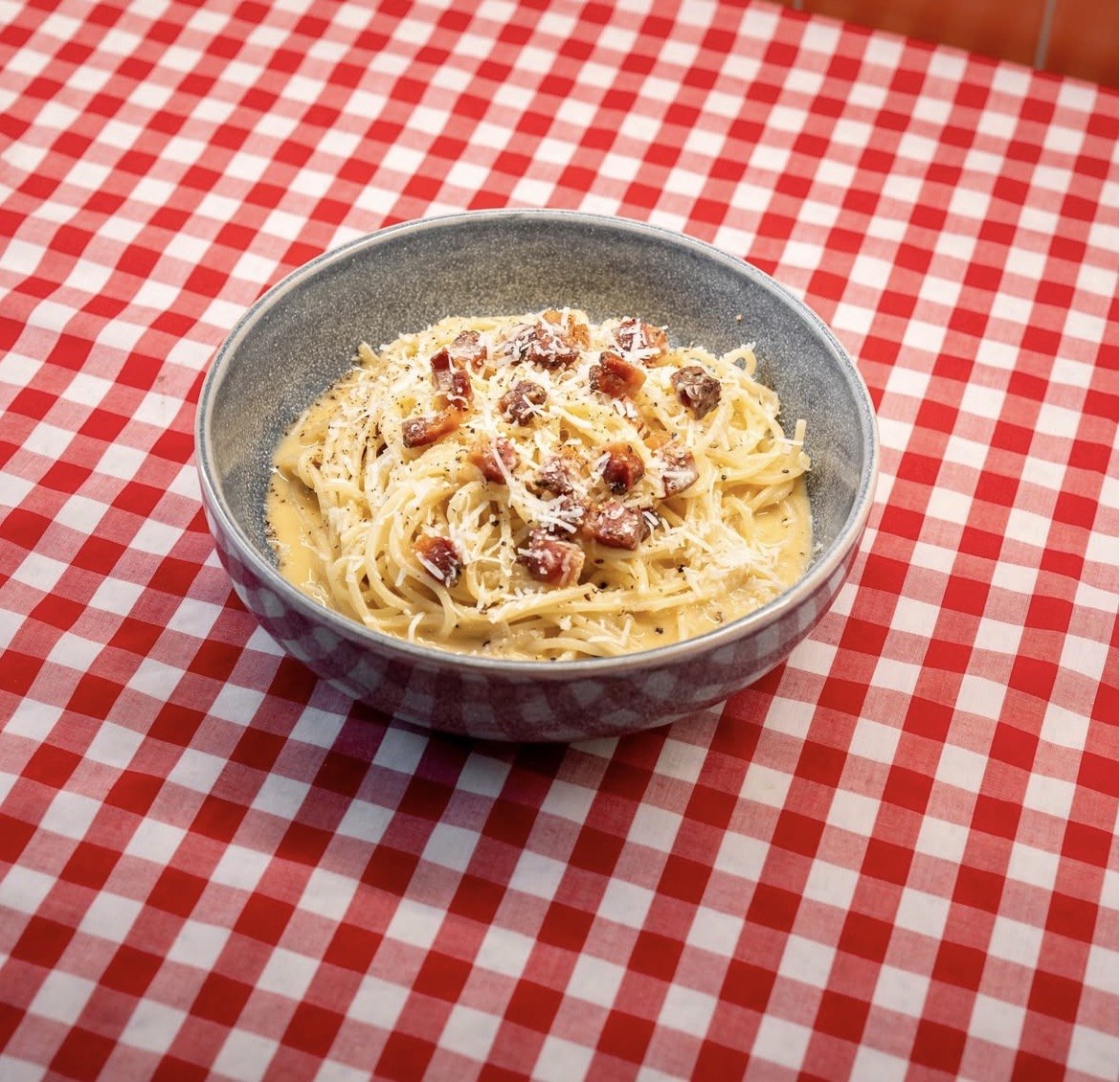
Spaghetti alla carbonara (Lazio)
Eggs, pecorino romano, guanciale and black pepper. The creaminess comes from the eggs and cheese — never cream.
- Use guanciale, not bacon, for the real flavour.
- Toss the pasta off the heat so the eggs do not scramble.
- Grind the pepper fresh. It is an ingredient, not a garnish.
Bucatini all'amatriciana (Lazio)
Guanciale, tomato, pecorino and chilli. Four things, done properly.
- Render the guanciale slowly until it is crisp but not dry.
- Let the tomato reduce until it coats the pasta.
- Finish off the heat with pecorino and a splash of pasta water.
Trofie al pesto (Liguria)
Basil, pine nuts, garlic, pecorino and parmigiano, extra virgin olive oil.
- Never cook the pesto — heat kills the basil.
- Loosen it with a spoonful of pasta water before tossing.
- Use young basil leaves; older ones turn bitter.
Pantry staples worth having
- Extra virgin olive oil — cold-pressed, for dressing and for cooking.
- Italian cheeses — parmigiano reggiano, pecorino romano, fresh mozzarella.
- Fresh herbs — basil, oregano, rosemary, parsley.
- Cured meats — guanciale, pancetta, prosciutto.
- San Marzano tomatoes — sweet, low in acidity, reliable.
Techniques to master
- Sauté gently. Medium heat for garlic, onion and vegetables — burnt garlic ruins a sauce.
- Simmer slowly. Give tomato sauces at least thirty minutes.
- Cook al dente. Pull the pasta early and finish it in the sauce.
- Emulsify. Cheese plus starchy pasta water makes a creamy sauce without any cream.
Bringing it to your table
Authentic Italian food works for a Tuesday night as well as a celebration. Come and taste what we cook, or try one at home — either way, buon appetito.